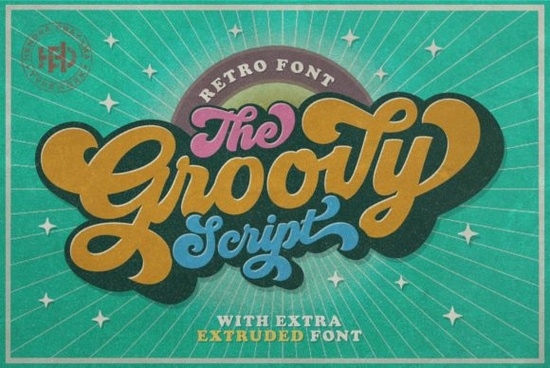
If you're looking for a script font that brings instant retro charm to posters, greeting cards, or apparel designs, Groovy Font is a thoughtful choice. It’s not just another vintage-inspired typeface it’s carefully drawn to echo the bold, flowing letterforms found in late-60s and early-70s advertising: think record sleeves, concert posters, and boutique signage. Its relaxed rhythm and subtle bounce give it warmth without sacrificing legibility, making it especially useful for crafters who need something expressive but still readable at medium sizes.
What makes Groovy Font feel authentically retro?
Unlike some script fonts that lean heavily into exaggerated swirls or tight connections, Groovy balances personality with practicality. The lowercase ‘g’ and ‘y’ have gentle descenders, the capitals carry just enough flair to stand out, and the spacing feels open not cramped so it works well both digitally and in print. It’s designed to pair naturally with simple sans-serifs or even textured backgrounds, which helps when you’re building mood boards or mockups for clients or your own shop.
Who uses Groovy Font and how?
Small business owners printing custom mugs or tote bags often choose Groovy for short slogans or brand names where nostalgia adds emotional resonance. Print-on-demand sellers find it reliable for seasonal collections especially spring and summer themes because its energy fits well with floral illustrations, sunbursts, or mod-style patterns. Designers working on wedding stationery sometimes use it sparingly for names or dates, pairing it with cleaner fonts to keep things elegant rather than overwhelming.
Crafters using Cricut or Silhouette machines appreciate that Groovy includes clean vector outlines (in OTF and TTF formats), so it cuts smoothly and scales without pixelation. And since it comes with full Latin character support including accents and punctuation it’s usable for bilingual projects or international markets without extra work.
How does Groovy compare to other popular script fonts?
It sits comfortably between playful and polished. Compared to vintage handmade fonts, Groovy feels more refined and consistent less “rough draft,” more “designed for reuse.” It’s less delicate than Hello Honey, which leans sweet and romantic, and less structured than Daddy, which has stronger contrast and sharper terminals. If you like the vibe of Baseball Classic but want something softer and more fluid, Groovy fills that gap nicely. And while Biscuit offers charming irregularity, Groovy gives you control without sacrificing character.
That said, it’s not meant for body text or long paragraphs. Like most script fonts, it shines best at display sizes headlines, logos, quotes, or single-line emphasis. Think of it as a visual accent, not a workhorse.
Where to use Groovy Font (and where to pause)
You’ll get strong results using Groovy on:
- Handmade greeting cards (birthday, anniversary, thank-you)
- Wall art prints and framed quotes
- T-shirt graphics with minimal supporting illustration
- Digital social media posts especially Instagram carousels or Pinterest pins with retro themes
- Small-batch packaging labels for artisanal food or bath products
Avoid using it for:
- Small text on product tags or care labels
- Long website headlines where screen readability matters more than style
- Branding systems requiring multiple weights (Groovy is a single-weight script)
For reference, you can see real-world usage examples and licensing details on the official page: Groovy Font.
A quick tip before you download
Try pairing Groovy with a neutral sans-serif like Montserrat or Lato for contrast this keeps your layout grounded while letting the script do the talking. Also, test it at actual print size first: what looks great on screen at 72pt might need slight tracking adjustment when printed at 2 inches tall on a mug. Most design apps let you preview at 100% scale; use that feature before finalizing.
Before adding Groovy Font to your next project, ask yourself:
- Is the message short enough to benefit from a stylized script?
- Will the audience recognize (or enjoy) the retro tone or could it feel dated or unclear?
- Do I have a fallback font ready if I need to adjust for accessibility or legibility later?
- Have I checked the license for my intended use? (Personal, commercial, and POD rights are included but always double-check the latest terms.)
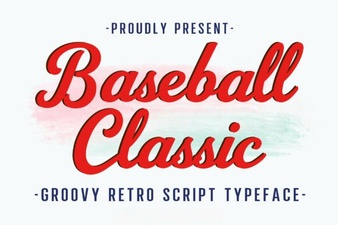 Classic Baseball Fonts for Your Design Projects
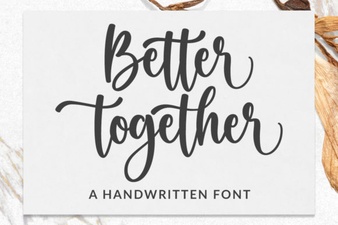 Better Together Font: Design & Creative Uses
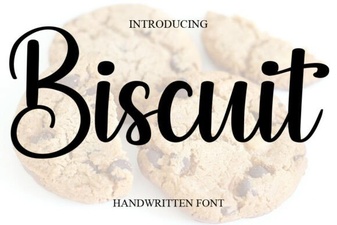 Craft with Biscuit Font: Design & Usage Guide
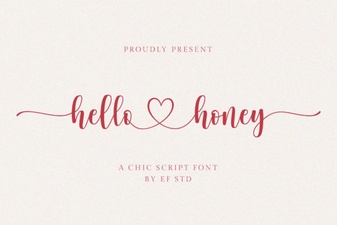 Hello Honey Font: Creative Uses & Typography Projects
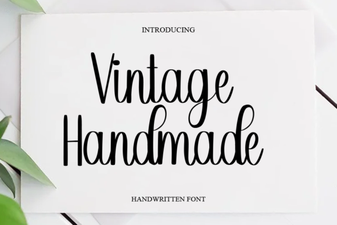 Craft Projects with Vintage Handmade Fonts
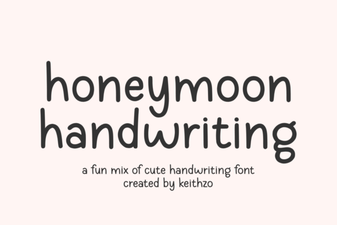 Honeymoon Font: Elegant Scripts for Wedding Projects